
Losing a tooth can affect not only your smile but also your self-esteem and oral health. Fortunately, modern dentistry offers a solution that has revolutionised tooth replacement: dental implants.
Find out why dental implants are the gold standard for tooth restoration and how Endeta Dental Clinic can help you achieve a natural and permanent restoration.
What Are Dental Implants?
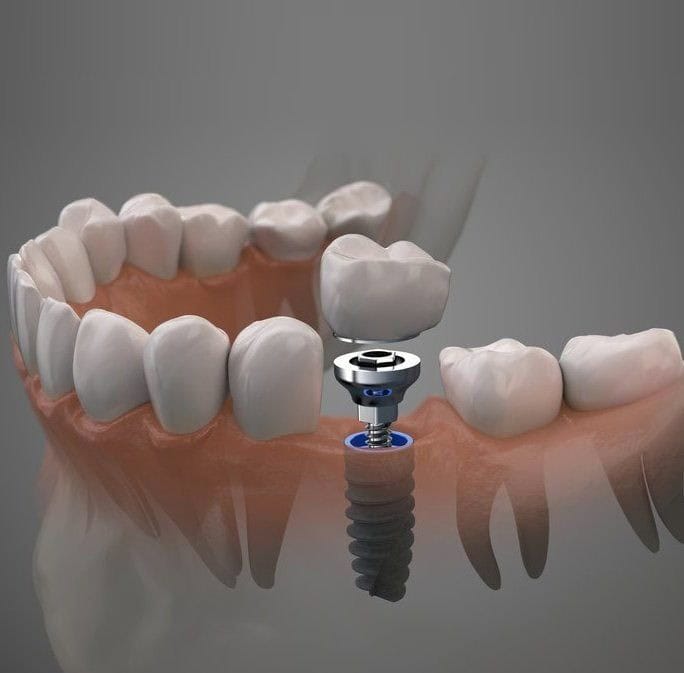
A dental implant is a sophisticated solution for replacing lost teeth that replaces the full structure of a natural tooth from the root to the crown. Simply put, it is an artificial tooth root that ensures a strong base for artificial teeth.
Three components:
- Implant (Root) – A titanium post that is surgically placed in the jawbone.
- Abutment (The connector) – A connecting piece attached to the implant.
- The crown (Visible tooth) – An artificial personalized tooth that perfectly fits your natural teeth.
- Full integration – All these components work together as one.
How do dental implants work?
The process is based on an incredible biological phenomenon known as osseointegration:
- Surgical placement – The implant will be inserted in the jawbone.
- Integrating with the bone – The jawbone will grow around the titanium post for a period of 3-6 months.
- Permanent connection – Creates a strong base, the same as the natural tooth root.
- Placement of the dental crown – The final restoration will be placed after the implant is completely healed.
- Natural function – They work the same as your original teeth.
Types Of Dental Implants
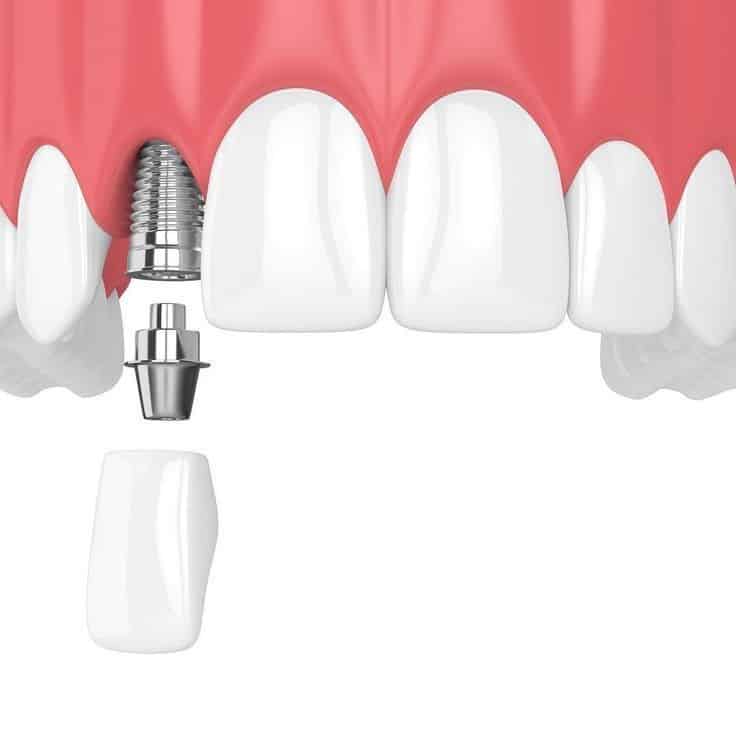
Single Tooth Implants
The perfect choice for replacing a single missing tooth:
- Individual restoration – A single implant for every lost tooth.
- Doesnt affect neighbouring teeth – The nearby teeth will remain healthy.
- Natural appearance – Fits perfectly with the existing teeth.
- Independent function – Each tooth stands on its own.
- Ideal for tooth loss as a result of cavities, damage, or extraction.
Implant-Supported Bridges
For several lost teeth in a row:
- Implant-supported bridge – Two implants supporting several crowns.
- Cost-effective solution – Fewer implants needed than in individual replacements.
- Strong and stable – Safer than traditional bridges.
- Preserves the bone – Implants stimulate the health of the jawbone.
- Ideal for several lost teeth in a row.
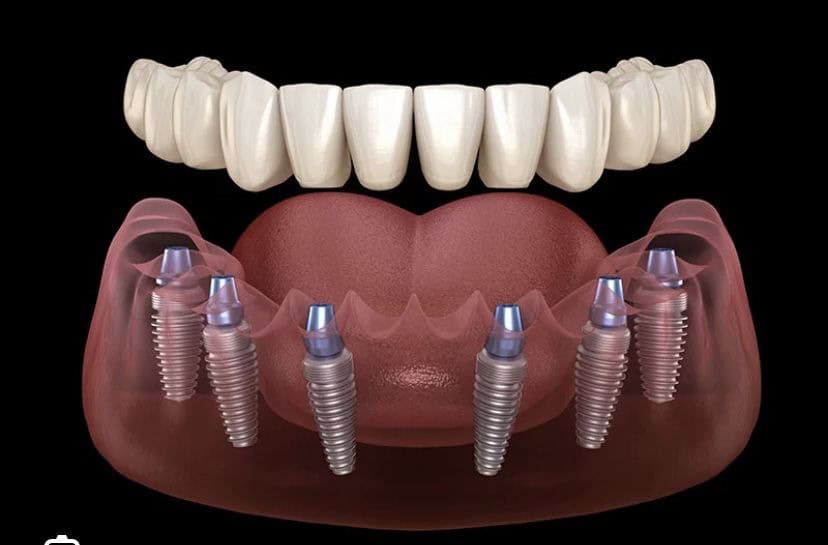
All-On-4 / All-On-6 / All-On-8
Restoration of a full dental arch:
- Full Mouth Solution – Entire upper or lower arch.
- Only 4/6/8 implants needed – Strategic placement for maximal support.
- Immediate loading implants – Temporary teeth are often placed on the same day.
- No need for bone grafting in most cases.
- Ideal for patients with severe tooth loss or damaged teeth that need to be extracted.
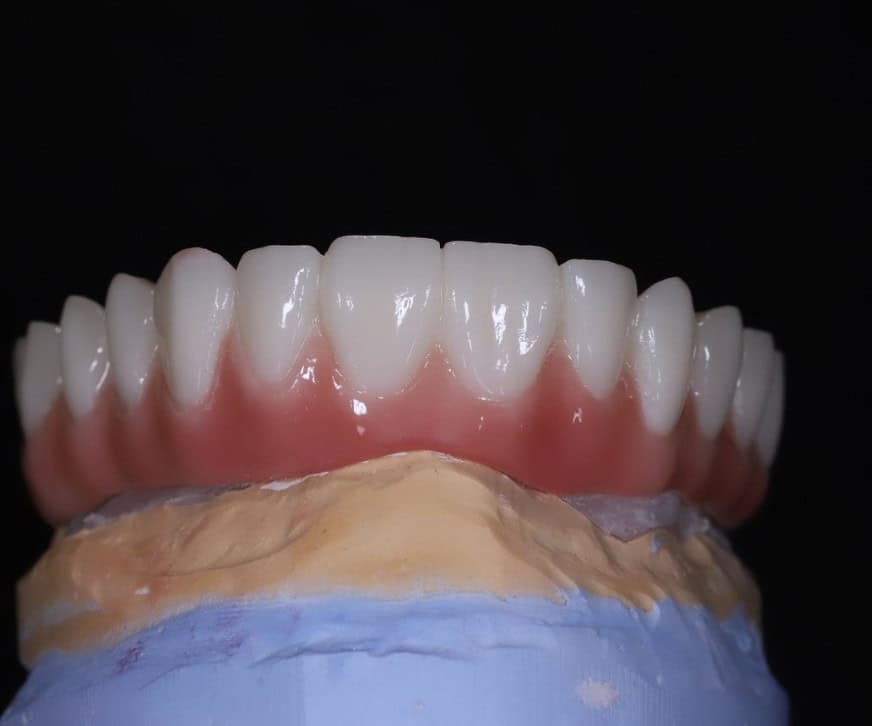
Implant-Supported Dentures
- Snap-on design – Securely attaches to implants
- No slippage, unlike traditional dentures
- Improved chewing – Much more durable
- Ideal for – Patients who want removable options with stability
Why Are Dental Implants Considered The Gold Standard
Natural Feeling And Appearance
They are the same as natural teeth: The implants will be personalized for your smile.
Natural Gum Line – They are designed to fit perfectly with the mouth structure.
No Visible Metal – Ceramic crowns look completely natural and metal-free.
Smile with Confidence – No one will know you have implants.
Professional Results – Lab-Created for perfection.
Dental implant function
- Maximal biting force – 70-80% of natural tooth strength.
- You can eat everything – Meat, apples, corn – no limitations.
- You can speak clearly – No risk of implants slipping.
- Feel safer – You dont need to worry if your teeth are moving.
- You will forget you have implants as they feel the same as natural teeth.
Maintain Jawbone And Facial Structure
When you lose a tooth, the jawbone will start to deteriorate. Here is what will happen:
- 25% bone loss – In the first year without teeth
- Progressive deterioration – Continues over time
- Facial collapse – Creates an aged, sunken appearance
- Adjacent teeth shift – Leading to further problems
- Traditional solutions don’t help – Dentures and bridges don’t stimulate bone
How do dental implants maintain the facial structure?
- Stimulate bone growth – Just like natural tooth roots
- Prevent deterioration – Maintain jawbone density
- Preserve facial structure – Keep your face looking young
- Long-term stability – Bone remains healthy for decades
- Support surrounding teeth – Maintain proper fit
Dental Bridges Compared To Dental Implants?
Traditional bridges:
- Requires the alteration of healthy nearby teeth.
- Permanently weakens the neighboring teeth.
- Creates potential problems in the future.
- Average duration: 5-10 years
Dental implants:
- Dont require the alteration of nearby healthy teeth.
- Stand independently.
- Protect nearby teeth
- It can last a lifetime with he right care.
Superior Stability And Durability
- 95-98%success rate – Lider statistics in the dental industry
- Last 25+ years or a lifetime – Only if properly maintained
- Composed of titanium – Extremely strong and biocompatible
- No cavities – The implant itself is not affected by cavities
- Minimal maintenance – They require the same maintenance as natural teeth
Dental Implants vs Other Alternatives
- Denture – Requires replacement every 5-8 years
- Dental bridges – Require replacement every 5-10 years
- Dental implants – 25+ years or a lifetime
Improved Oral Health
Dental implants offer a lot of benefits, including:
- Easier cleaning – Brush and floss as normal.
- No food buildup – Unlike bridges or dentures.
- Maintain fit – Prevent teeth from shifting.
- Healthier gums – No irritation from removable appliances.
- Better overall health – Proper nutrition from effective chewing.
Improved Comfort
- They should not be removed while sleeping, unlike dentures
- Don’t require dental adhesive.
- No dietary limitations – You can eat whatever you want.
- You won’t need to worry if the implants are moving.
- Normal oral hygiene – Brush your teeth as normal.
Functional Improvements
- Proper nutrition – The ability to enjoy the foods you like.
- Improved speech – clear pronunciation of words.
- No pain or discomfort, as they fit the same as natural teeth.
- Active lifestyle – You don’t need to worry about your teeth during physical activity.
Who Is A Suitable Candidate For Dental Implants?
Ideal candidates
- Enough bone density – The patient should have enough jawbone to support the implants.
- Good oral health – The remaining teeth and gums should be healthy.
- Good general health – The patient should be healthy.
- Non-smoker or willing to quit – Smoking can affect the healing process.
- Commitment to oral health – Willing to take proper care of the implants.
Special consideration (cases of bone loss):
- A bone grafting procedure is used if you don’t have enough jawbone density.
- Snus lift procedures for upper jaw implants.
- Advanced techniques – Make implants possible for many patients.
- Needed Assessment – Determine the best approach.
Medical conditions:
- Controlled diabetes – It is usually not an issue.
- Cardiovascular issues – Often managed with precautions.
- Osteoporosis – Requires careful assessment.
- Age is not an issue – Implant procedure can be successfully performed even for patients 70+
It is not recommended in cases of:
- Uncontrolled diabetes
- Active periodontal disorders (should be treated)
- Extensive smokers (Smoking will significantly reduce the success rate)
- Autoimmune disorders.
- Recent radiation therapy to the jaw area
Note: Endeta Dental Clinic offers detailed assessments to determine candidacy and alternative solutions when necessary.
Dental Implants Vs Other Treatment Options
Dental implants:
✓ Permanent solution
✓ Preserve the bone structure
✓ Natural feeling and appearance
✓ Does not affect other teeth
✓ 95-98% success rate
✗ Higher initial cost
✗ Requires surgery
Dental bridges:
✓ Non-surgical
✓ Quicker process
✓ Lower initial cost
✗ Requires the replacement of healthy teeth
✗ They do not prevent bone loss
✗ Only lasts about 5-10 years
✗ Harder to maintain
Dentures:
✓ Lower initial cost
✓ Non-surgical
✓ Can be designed quickly
✗ Uncomfortable for many
✗ They can slip
✗ Accelerate bone loss
✗ Dietary limitations
✗ Require frequent adjustments


 English
  Italian
  Albanian
  French